
Science is built on curiosity, experimentation, and the relentless pursuit of understanding how the universe works. But every now and then, a bold idea comes along that challenges everything we know—not because it is revolutionary, but because it is spectacularly, hilariously wrong.
Welcome to the world of BAHFest, where the greatest minds gather to celebrate the art of the impossible: beautifully constructed, confidently presented, and completely incorrect scientific theories.
Over the years, BAHFest has showcased an extraordinary collection of “research” that has reimagined everything from animal behaviour and human evolution to physics, biology, and everyday life. The speakers may begin with a questionable premise, but they deliver their arguments with the seriousness, enthusiasm, and attention to detail usually reserved for genuine scientific breakthroughs.
Here is a look back at some of the most memorable bad scientific theories to grace the BAHFest stage.
What Makes a Great BAHFest Theory?

A truly excellent bad scientific theory is not simply a random idea. The best entries follow the structure of real scientific thinking—complete with evidence, reasoning, diagrams, and a compelling explanation of why the impossible should actually be true.
A classic BAHFest theory usually contains:
- A completely incorrect starting assumption
- A surprisingly logical chain of arguments
- “Evidence” that appears convincing at first glance
- A confident scientific presentation style
- A conclusion that is wonderfully absurd
The magic happens when audiences find themselves thinking, “That almost makes sense,” before remembering that the entire theory is built on nonsense.
The Art of the Perfectly Wrong Hypothesis
Real scientists begin with observations and develop theories that explain them. BAHFest speakers take the opposite approach: they begin with an outrageous conclusion and carefully construct the evidence needed to support it.
This requires creativity, storytelling, and a deep understanding of scientific communication.
The strongest performances often parody genuine research methods, including:
- Academic terminology
- Experimental results
- Technical diagrams
- Statistical analysis
- Historical references
- Expert interviews
The result is a unique form of scientific comedy where the joke is not that science is ridiculous—the joke is that scientific reasoning can be used to convincingly defend almost anything.
Audience Favourites Through the Years
Every BAHFest event creates memorable moments, but some types of theories consistently capture audiences’ imaginations.
Theories That Rewrite Human History
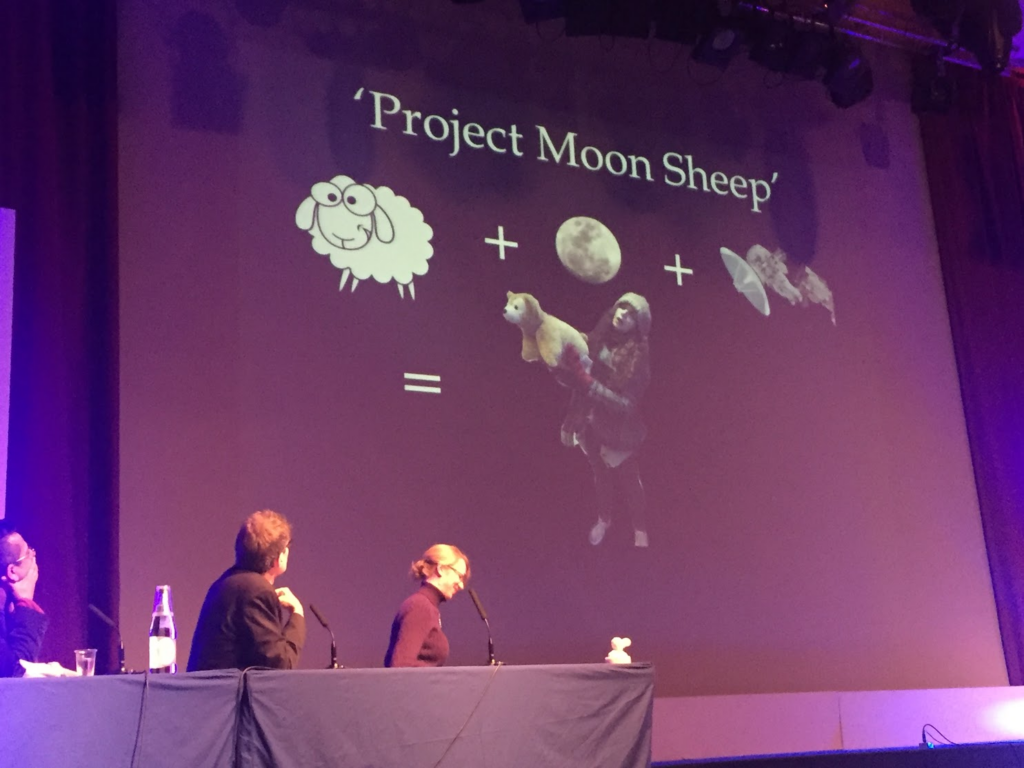
Some of the most popular presentations explore alternative explanations for humanity’s development.
These theories often examine familiar questions:
- Why do humans behave the way they do?
- How did civilisation develop?
- What hidden forces shaped our evolution?
The best examples take ordinary aspects of human life and provide completely unexpected explanations.
A speaker might identify a common behaviour and reveal that it is not the result of psychology, biology, or culture—but rather the outcome of an elaborate hidden mechanism that somehow escaped scientific discovery for thousands of years.
The audience reaction is often a mixture of laughter and admiration for the creativity behind the argument.
The Science of Everyday Objects
Another favourite category involves explaining ordinary experiences through extraordinary scientific claims.
These theories take things everyone recognises and ask:
“What if we have misunderstood this completely?”
A BAHFest presentation might investigate:
- Why household items behave strangely
- Why humans prefer certain habits
- Why common events occur at convenient times
- Whether familiar objects have secret purposes
The humour comes from treating everyday mysteries with the seriousness of a major scientific investigation.
Animal Behaviour Explained Badly
Animals provide endless inspiration for questionable scientific reasoning.
From pets to wildlife, BAHFest speakers have explored alternative explanations for animal behaviour that are imaginative, elaborate, and completely unsupported.
Popular themes include:
- The hidden motivations behind animal actions
- Secret communication systems
- Unexpected evolutionary strategies
- The true purpose of strange behaviours
The strongest animal theories work because they begin with a real observation before taking a dramatic wrong turn.
A cat knocking something off a table? Clearly, according to a BAHFest-style explanation, there must be a highly sophisticated reason.
Physics Theories That Defy Reality
Physics is one of the most tempting fields for bad science because it already deals with concepts that sound impossible.
Time, space, gravity, and energy provide endless opportunities for creative misunderstanding.
BAHFest physics presentations often imitate the language of serious theoretical research while introducing ideas that become increasingly impossible as the explanation continues.
The appeal comes from watching familiar scientific concepts being stretched far beyond their limits.
Celebrating the Winners
BAHFest awards recognise not only the funniest ideas but also the quality of the argument behind them.
A winning presentation typically combines:
A Strong Premise
The theory needs a clear and memorable central idea. The audience should understand the claim immediately—even if they cannot believe anyone would propose it.
Excellent Scientific Storytelling
The best speakers understand that convincing nonsense requires structure.
They build their argument carefully, introducing evidence, explaining mechanisms, and answering imaginary objections.
Commitment to the Performance
A bad scientific theory works best when presented with complete confidence.
The speaker must become the world’s leading expert on something that absolutely should not exist.
Why Audiences Love Bad Science
BAHFest succeeds because it celebrates something fundamental about science: curiosity.
The event does not mock scientific research. Instead, it highlights the creativity, communication skills, and imagination that make scientific discovery possible.
By exploring intentionally incorrect theories, audiences gain a greater appreciation for how real science works.
A genuine scientific theory must survive:
- Testing
- Evidence
- Peer review
- Repeated observation
- Critical examination
BAHFest theories deliberately fail these tests—but they do so with enthusiasm, creativity, and excellent presentation skills.
The Hidden Lessons Behind Bad Ideas
Although the theories are fictional, BAHFest reveals several important truths about scientific thinking.
Evidence Matters
Almost any conclusion can sound convincing if evidence is selected carefully. Good science requires looking at all available information, not only the information that supports an idea.
Questions Drive Discovery
Many real scientific breakthroughs began with unusual questions. The difference is that successful discoveries are followed by rigorous investigation.
Communication Is Powerful
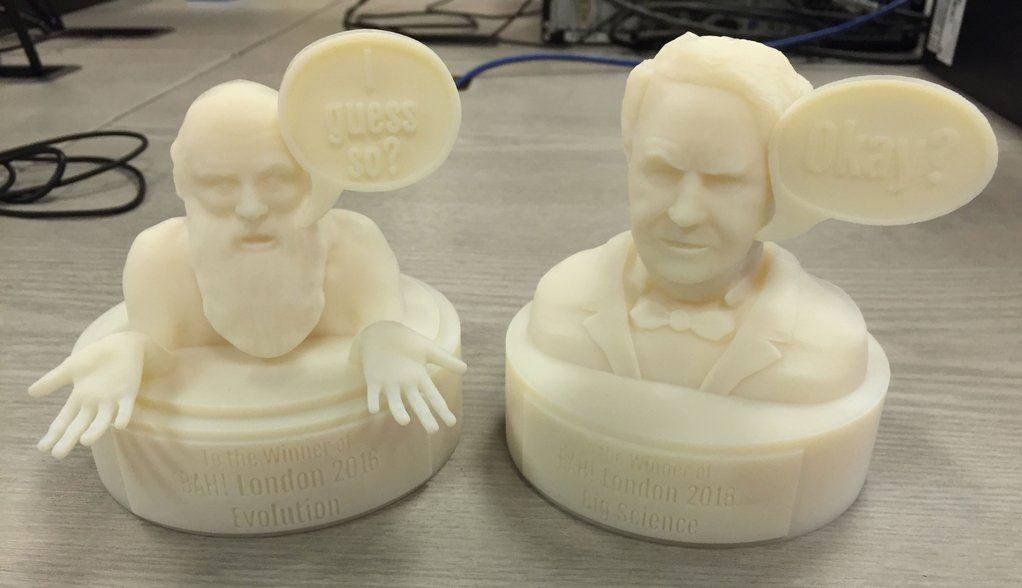
A well-presented idea can influence how people think. BAHFest reminds audiences why scientific communication must be clear, accurate, and responsible.
The Legacy of BAHFest’s Greatest Ideas
The best bad scientific theories live on because they represent something uniquely human: our desire to explain the world around us.
Even when the explanation is completely wrong, the process of imagining possibilities is entertaining and inspiring.
For years, BAHFest has brought together scientists, comedians, performers, and curious audiences to celebrate the joy of questioning everything—even when the answer is obviously incorrect.
The greatest theories presented at BAHFest are not remembered because they changed science. They are remembered because they showed how much fun science can be when imagination is allowed to run wild.
After all, every great scientific discovery begins with an idea.
BAHFest simply asks one additional question:
“What if that idea is completely wrong—and we can prove it beautifully?”